language

Sj News Frontpage

10 August 2020
There is no translation available.

 Yalnızca 2 Adet Satılacak Olan Ferrari Roma Eylül’de Türkiye’de!

Ferrari’nin yeni coupe modeli Roma, Eylül ayında Türkiye yollarıyla buluşmaya ...

18 February 2022
There is no translation available.

“Hibrit Egea” Dünya Yollarına Çıkmaya Hazırlanıyor

Fiat ...

19 April 2021
There is no translation available.

%100 Elektrikli MG ZS EV 394 Bin TL İle Türkiye’de Satışa ...

14 December 2020
There is no translation available.

%100 Elektrikli Yeni Renault ZOE Türkiye’de

%100 Elektrikli ...

24 February 2026
There is no translation available.

2026 Ford Kuga, BlueCruise eller serbest sürüş teknolojisiyle ...

All Stories

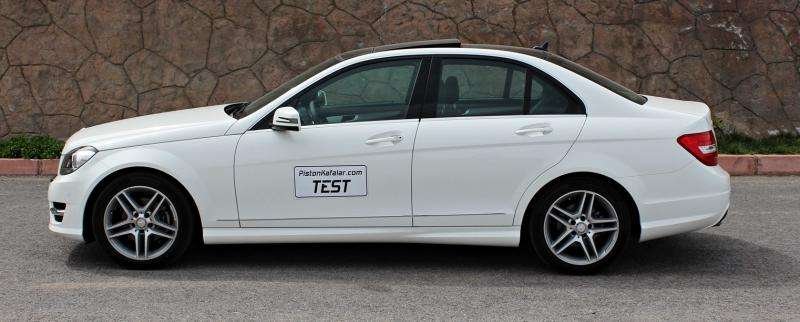
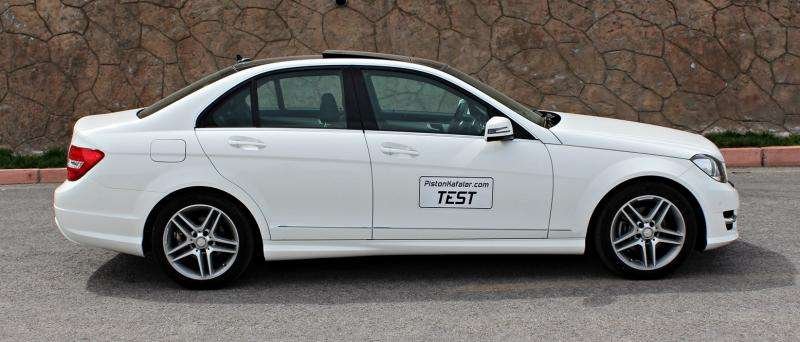
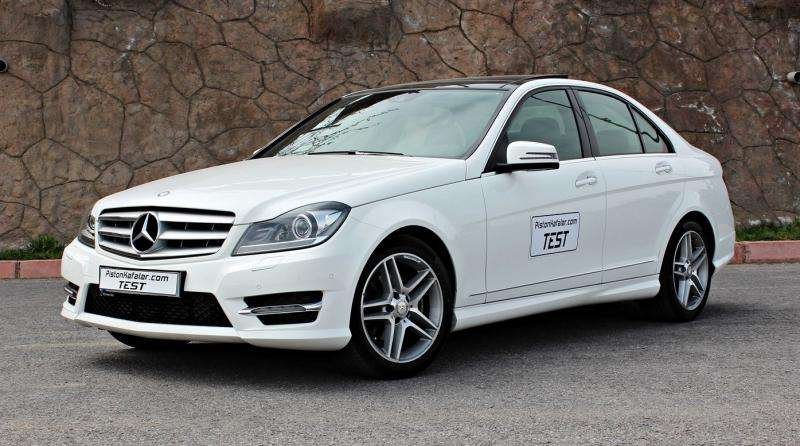
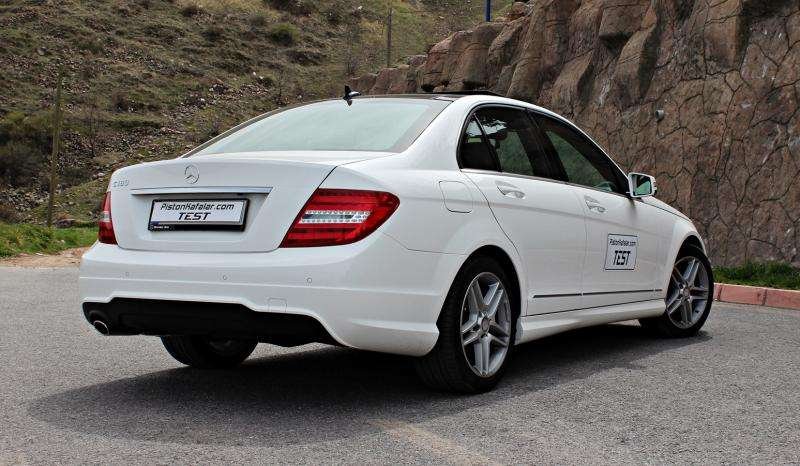
Mercedes-Benz C180 AMG Selection Plus

There is no translation available.

Model 2013
Motor 1597 cc
Şanzıman Otomatik (7 ileri)
Güç 5300 d/d 156 Hp
Tork 1250 d/d 250 Nm
0-100 8.5 Sn
Maksimum Hız 223 km/s
Ortalama Tüketim 6.3 lt/100 km
Bagaj Hacmi 475 lt
Ağırlık 1485 Kg
Malzeme kalitesi, Performans, Müzik sistemi, Şıklık, Konfor, Donanım
Yakıt tüketimi, Arka koltuk baş mesafesi, Yolcu koltuğu ileri geri otomatik. opsiyonu yok

Mercedes, 2007 yılında pazara sunduğu ve tamamen yenilediği C-Klas ile aradan geçen 5 yılın ardından halen satış listelerinde en üst seviyelerde gezen bir model üstelik markanın 1.6L motor üretim hikayesi de Dünya pazarı için sansasyonel sayılabilecek türden.

Türkiye de büyük hacimli motorlar üzerinden alınan yüksek vergi sebebiyle nihai kullanıcının tereddüt ile satın alma yoluna gittiği ya da satın alamadığının farkına varan Mercedes-Benz Türkiye  Direktörler Kurulu Başkanı Jürgen Ziegler, markanın tarihinde ilk defa Premium orta sınıf için daha ulaşılabilir bir rakama satılabilmesi adına 1.6L hacme sahip aşırı besleme motor fikrini sunuyor ve Almanya Stuttgart’taki üretim mühendislerine bu fikri kabul ettiriyor. Alman Endüstri Devi Mercedes, bu projenin üretime geçmesi ile Türkiye başta olmak üzere tüm dünya da ciddi satış adetlerine ulaşıyor.

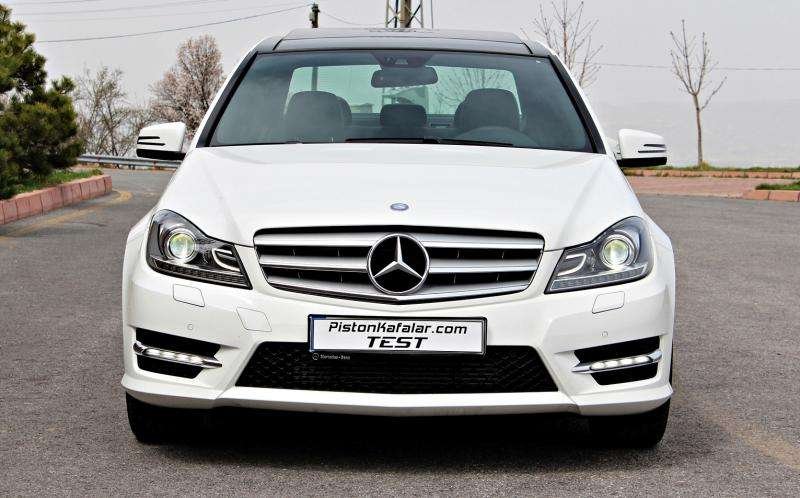
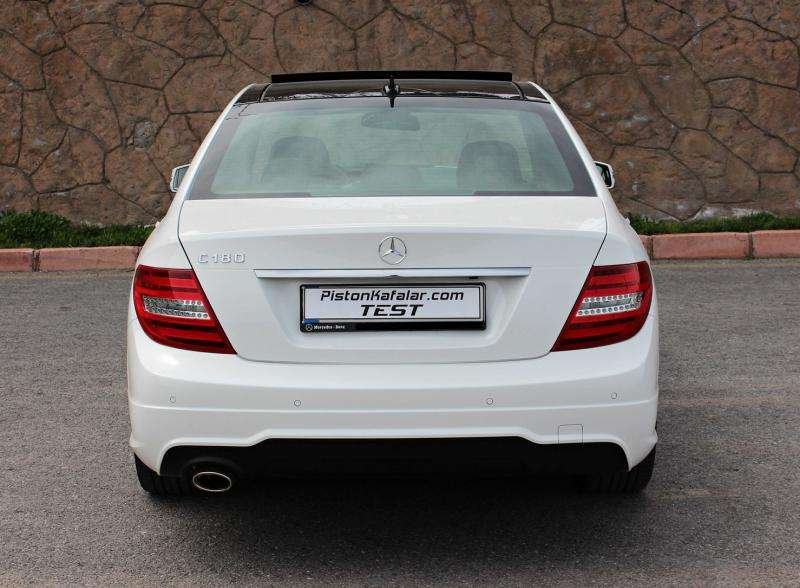
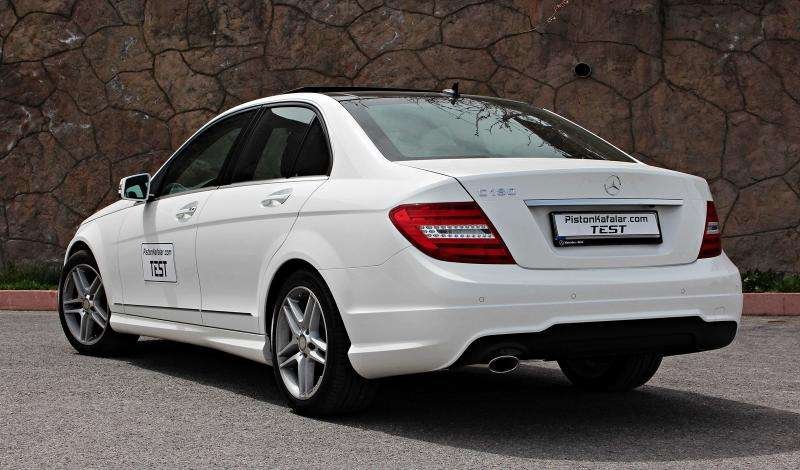
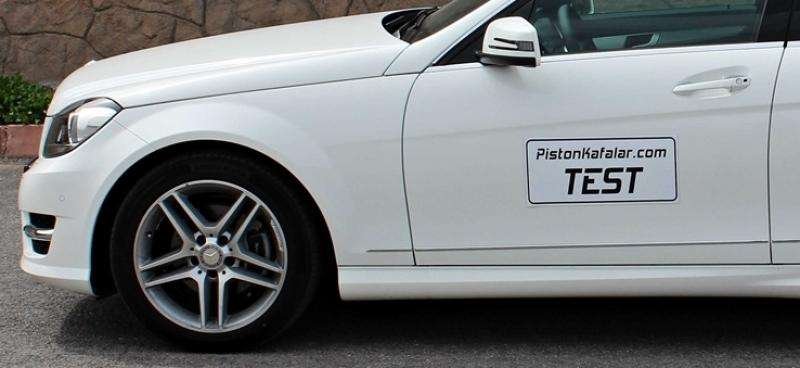
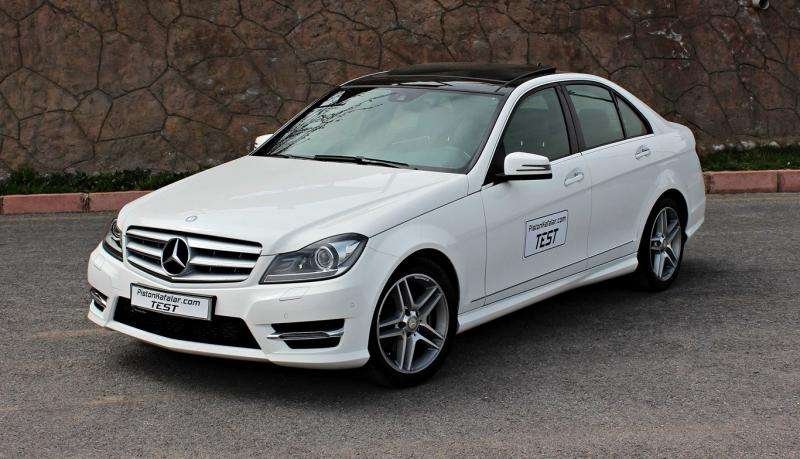
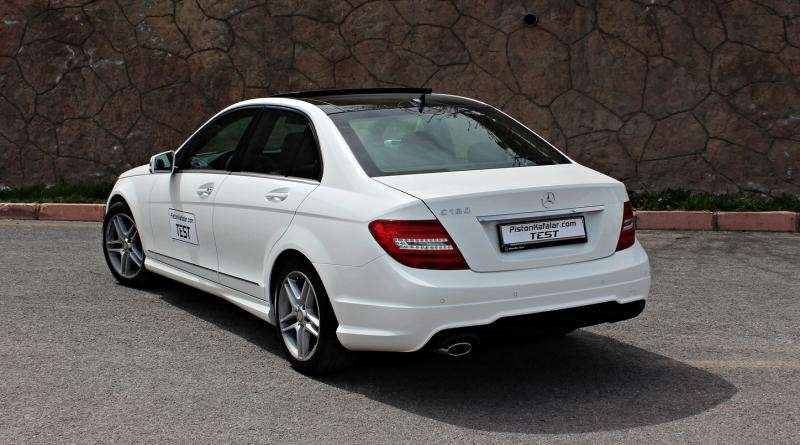
Sizler için test ettiğimiz W204 kasa Mercedes-Benz C180 de markanın 1.6L hacme sahip AMG paket ve bu seri için tasarladığı en yüksek donanım seviyesi Selection Plus  ile tüketiciye sunduğu makyajlı versiyonu oluyor.

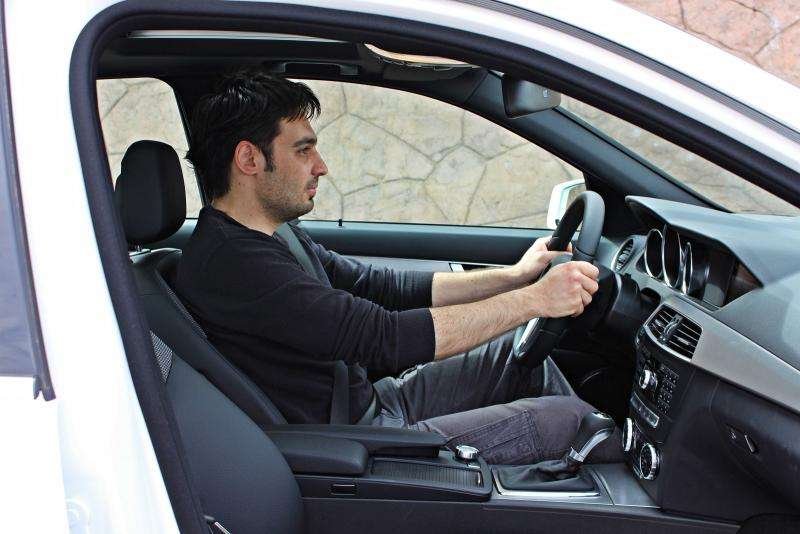
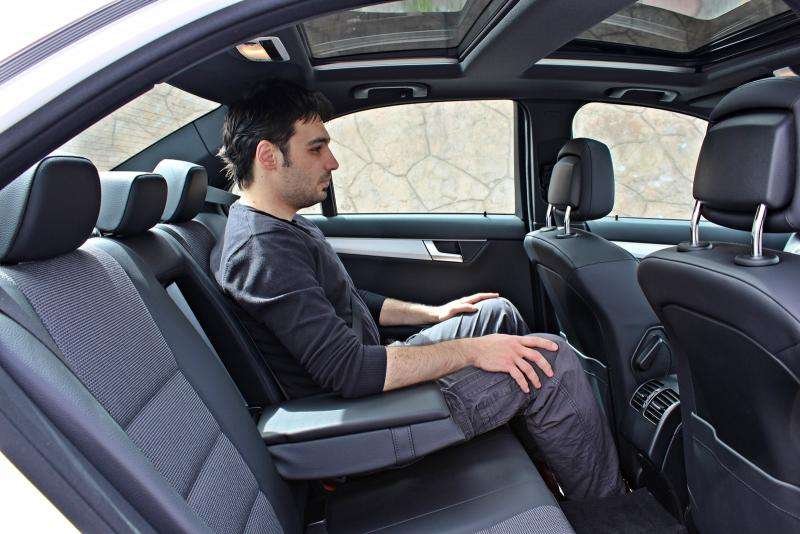
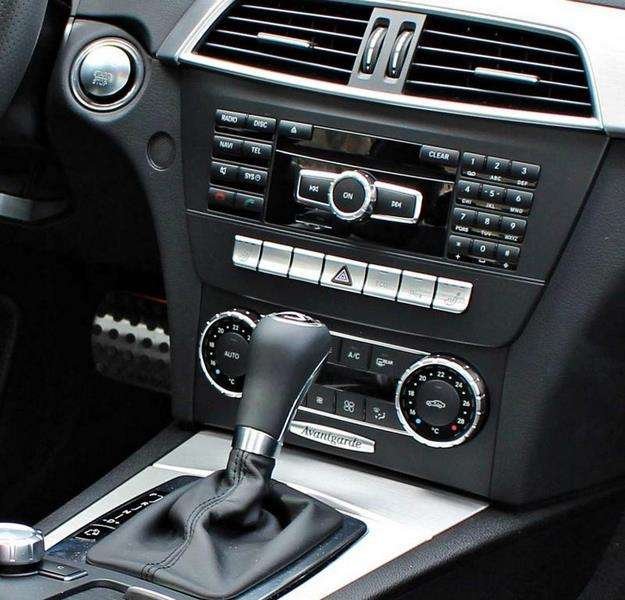
Makyajlı yüzü ile eskiye oranla daha dinamik bir görünüme kavuşan C180, tampona entegre gündüz farları ile sportif göründüğü kadar güvenliğe de önem veriyor. Otomobilin yaşam alanına geçtiğimizde ise S-Class’dan aşina olduğumuz yeni dash board hemen dikkat çekiyor, bu uygulamanın selefine göre daha pratik ve şık durduğunun da altını çizelim. Aracın yaşam alanında çift panoramik tavan kullanılmış bu sayede ferah bir alan yaratılırken herhangi bir ergonomik kusur ise yaşanmıyor, ön yolcular için diz mesafesi sorun yaşatmazken 180cm ve üzeri boydakilerin arka kısma iniş binişlerde ve yolculuk esnasında başlarını biraz eğmeleri gerekebiliyor.

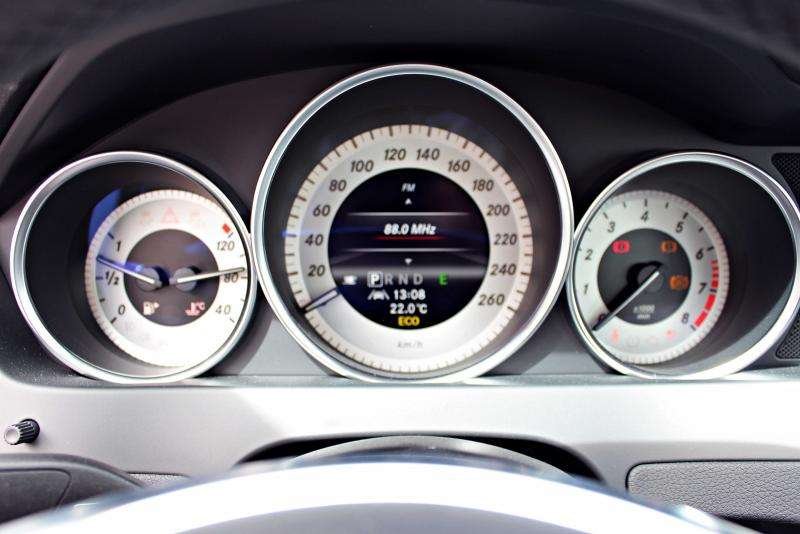
Sayısız teknolojinin kullanıldığı otomobilde  anahtarsız giriş ve sürüş sistemi ile daha önce tanışmamış olanların bir müddet afallaması hayli normal fakat sistemi kısa sürede öğrendiğiniz zaman bu teknolojinin ne kadar pratik ve akıllıca olduğunu anlıyor ve Mercedes’e hak veriyorsunuz!  ayrıca göstergelerin ortasına konumlandırılmış bilgi ekranı sayesinde tüm kontrolleri buradan izleyebiliyorsunuz.  Yazımın başında belirttiğim gibi en üst donanım seviyesine sahip test aracımızda şerit değişiminde direksiyonda ki titreşim ile sizi uyaran takip sisteminden yorgunluk algılayıcıya, Econ (Start-Stop) modundan, akıllı ışık paketine kadar tüm fonksiyonların bilgi kontrolünü bu ekran ile yapabiliyorsunuz aynı zamanda Türkçe navigasyonun da bu pakette standart olduğunu hatırlatalım.

Tasarım ve teknolojik yenilikler bir yana bu otomobilde benim için en önemli kriter otomobilin sergileyeceği performans ve paralelinde ne kadar yakıt tükettiği ile ilgiliydi. Test aracımızın kaputu altında diğer kardeşlerinden aşina olduğumuz 1.6L hacme sahip benzinli bir ünite yer alıyor bu motor araca 5.300d/d’da 156Hp güç sağlarken 1.250-4.000d/d aralığında tam 250Nm tork sunuyor. 7G-Tronic şanzıman sayesinde 0-100km/s hızlanmasını 8.7sn’de gerçekleştiren C180 fabrika verilerine göre maksimum 217km/s hıza ulaşıyor. Yanal ivmelenmelerde sınırları zorlamadıkça stabil sürüş karakteri sergileyen test aracımız limitler zorlandığında hafif önden kayma eğilimi gösteriyor fakat ESP sistemi sayesinde hemen izine geri dönüyor. Üretici tarafından ortalama 6.2lt yakıt tüketim değeri sunan C180 bir hafta süresince gerçekleştirdiğimiz testlerimiz  esnasında Econ ve Start-Stop sistemine rağmen ortalama  10.7lt  yakıt tüketti.

94.600 TL’sından  başlayan fiyatlarla satılan 1.6L Mercedes-Benz C180 ler, AMG Selection Plus donanım seviyesine sahip test aracımızda 123.600 TL’sından alıcı bekliyor. Bu donanım paketine sahip araçlarda AMG paket (Ön ve arka AMG tamponlar, AMG jantlar), panoramik açılır tavan, yaşam alanında sportif alüminyum ekipmanlar ve ele iyi oturan sportif deri direksiyon simidi, yorgunluk algılayıcı, ışık paketi vb. hayli kabarık liste yer alıyor.

 PistonKafalar Değerlendirme

Down sizing akımına duyarsız kalamayan Mercedes-Benz 1.6L hacme sahip motoru ile daha ulaşılabilir bir otomobil sunuyor. EuroNcap çarpışma testlerinden 5 yıldız alan C180, yüksek malzeme kalitesi ve orta sertlikteki süspansiyonu ile hem konfor hem de sportif sürüş karakterini bir arada yaşatıyor. Ön yolcu koltuğunda ileri geri kaydırmanın mekanik olduğu aracımız eleştirilere maruz kalırken 480lt hacme sahip bagaj yeterli görünüyor. Ülkemizde uygulanan vergi sistemi ve aracın D ve E segmenti sedanları aratmayan konfor ve güvenlik donanımlarını düşünürsek C180 taktiri hak eden bir otomobil fakat C180 sunduklarının karşılığı olarak benzin istasyonuna çok sık uğratacak bir otomobil.
Yazı & Fotoğraf : Akın DAĞYARAN


Tesla Cybercab Hits the Road, but Its Legal Status Is Under Scrutiny

There is no translation available.

Tesla Cybercab is operating in Austin, but NHTSA is investigating whether the steering-wheel-free robotaxi complies with federal safety standards.

Tesla has begun deploying its purpose-built Cybercab for rides in Austin, Texas, but the steering-wheel-free robotaxi has immediately attracted regulatory attention. The U.S. National Highway Traffic Safety Administration (NHTSA) has opened an investigation into Tesla’s self-certification of the vehicle, raising a much bigger question: how should decades-old vehicle safety rules apply to a car designed to operate without a human driver?

Why Is NHTSA Investigating the Tesla Cybercab?

The Cybercab is fundamentally different from a conventional passenger car. The two-seat autonomous vehicle has no steering wheel, pedals or traditional mirrors, features normally associated with federal vehicle safety requirements.

In the United States, manufacturers can generally certify themselves that their vehicles comply with applicable Federal Motor Vehicle Safety Standards (FMVSS). NHTSA can then investigate whether that certification is valid.

Tesla has taken this self-certification route with the Cybercab.

Following its commercial deployment in Austin, NHTSA opened an Audit Query covering the basis on which Tesla certified up to 1,000 Cybercabs. The regulator will examine the technical data and processes Tesla used, including whether the company determined that some requirements written for human-driven vehicles simply do not apply to the Cybercab.

Why Didn't Tesla Apply for an Exemption?

This is where the story becomes particularly important.

Manufacturers can apply for federal exemptions when vehicles do not comply with existing safety standards. However, Reuters reports that this route can limit commercial deployment to 2,500 vehicles per year.

That would be difficult to reconcile with Tesla's ambitions.

Elon Musk has positioned Cybercab as a future high-volume vehicle and a central part of Tesla's plan to build a large autonomous ride-hailing network. Tesla began Cybercab production in April 2026, although Musk said initial production would be slow.

By arguing that Cybercab already complies with applicable federal standards, Tesla could potentially avoid the 2,500-vehicle exemption limit — provided regulators accept the company's interpretation.

Zoox Tried a Similar Approach

There is already an important precedent.

Amazon-owned Zoox previously attempted to self-certify its purpose-built autonomous vehicle, which also lacks conventional driving controls. NHTSA investigated, Zoox eventually withdrew that certification claim and later received an exemption for limited commercial deployment.

That history suggests Tesla could face a significant regulatory battle if NHTSA rejects its interpretation of existing rules.

Reuters also reports that a disagreement between Tesla and NHTSA over self-certification could ultimately end up in court.

Cybercab Is Already Operating in Austin

Tesla has not waited for the regulatory debate to be resolved.

Cybercabs have joined the company's robotaxi operation in limited areas of Austin, Texas, alongside autonomous Model Y vehicles. Unlike the Cybercab, Model Y retains conventional controls such as a steering wheel and pedals.

This distinction matters because many existing federal standards were written around vehicles controlled by humans.

NHTSA itself acknowledges that those regulations need updating. The agency says it is working on multiple rulemakings involving areas including brake pedals, windshield wipers, lighting and rear-view mirrors to better accommodate automated vehicles. Until those changes are completed, however, the existing standards remain in force.

The Decision Could Go Beyond Tesla

The Cybercab investigation is therefore about much more than one Tesla model.

If Tesla successfully demonstrates that a purpose-built driverless vehicle without conventional controls can comply with today's regulations without a special exemption, it could create an important path for large-scale autonomous vehicle deployment.

If NHTSA disagrees, Tesla's plans to rapidly expand Cybercab could face a major regulatory obstacle.

Why Is Volkswagen Downsizing? 50,000 Jobs and Half Its Model Line-up Could Go

There is no translation available.

Why is Volkswagen downsizing? Future Plan 2030 could reduce 50,000 positions, halve its model range and reshape its global production network.

Volkswagen Group is preparing for one of the biggest transformations in its history. Around 50,000 additional positions could be cut as part of its Future Plan 2030, but the restructuring goes far beyond jobs. The German automotive giant plans to reduce production capacity, dramatically simplify its model range and reshape its global operations as it responds to weaker demand, high costs in Germany and growing competition from Chinese manufacturers.

Why Does Volkswagen Need to Downsize?

One of Volkswagen's biggest problems is the gap between its production capacity and actual demand.

The company says its European factories currently have capacity for more than 500,000 vehicles a year beyond what the market requires. Maintaining factories, employees and infrastructure for cars that are no longer being sold in sufficient numbers has become increasingly expensive.

China is another major challenge.

Volkswagen lost its long-held position as China's best-selling carmaker to BYD in 2024 and fell behind Geely as well in 2025. The rapid rise of Chinese brands, particularly in electric vehicles, has weakened Volkswagen's position in what was historically one of its most important markets.

German Production Has Become Expensive

Volkswagen is also dealing with significantly higher manufacturing costs in Germany.

According to Harbour Report data from Oliver Wyman cited by Reuters, labour costs amount to approximately $3,307 per vehicle in Germany, compared with around $955 in Spain and just $597 in China.

Increasing the German working week from 35 to 40 hours has therefore been discussed as one possible way of improving competitiveness.

However, longer working hours alone cannot solve Volkswagen's fundamental problem. If factories already have excess capacity because demand is insufficient, producing more efficiently does not eliminate that excess capacity.

What Happens to the 50,000 Jobs?

Volkswagen had already reached an agreement to reduce more than 35,000 positions in Germany by 2030 through socially responsible measures.

Future Plan 2030 goes further. Volkswagen Group now sees the need to adjust its global workforce capacity by roughly another 50,000 positions, including management roles.

This does not necessarily mean 50,000 employees will immediately be dismissed. How the reductions will be implemented will depend on negotiations involving individual brands, sites and employee representatives.

Volkswagen Could Cut Half Its Models

For customers, one of the most significant parts of the restructuring is what happens to Volkswagen Group's cars.

The company plans to reduce its model portfolio by around 50% by 2035, while cutting the complexity created by different variants and configurations by approximately 75%.

The strategy is straightforward: fewer models, fewer variations and higher production volumes for the vehicles that remain.

Annual production capacity is also expected to be adjusted from roughly 10 million to nine million vehicles.

What Will Happen to Volkswagen's Factories?

The future of several German plants is also uncertain.

Volkswagen has said competitive new production allocations for its Emden, Zwickau, Hannover and Neckarsulm plants cannot currently be guaranteed for the 2031-2034 period.

Alternative uses for some sites are therefore being considered as Volkswagen develops a new European manufacturing structure.

Despite the cuts, Volkswagen is not abandoning investment. The group plans to spend around €135 billion on research, development and investment between 2027 and 2031.

The ultimate objective is not simply to make Volkswagen smaller. It is to create a company with fewer models, less complexity, lower excess capacity and higher profitability.

Refreshed Nissan Fairlady Z Debuts: NISMO Finally Gets a 6-Speed Manual

There is no translation available.

The refreshed Nissan Fairlady Z debuts in Japan, while the Z NISMO finally gains a 6-speed manual transmission and GT-R-derived brakes.

Nissan has launched the refreshed Fairlady Z and Fairlady Z NISMO in Japan. The RZ34-generation sports car receives a redesigned front end, suspension improvements and new technology, while the biggest change comes to the NISMO: previously offered only with a 9-speed automatic, it is now available with a 6-speed manual transmission.

Nissan continues to evolve the Z legacy that began with the S30 in 1969. Rather than radically changing the RZ34, the latest update focuses on refining its design and strengthening the connection between driver and car.

What Has Changed Compared With the Previous Fairlady Z?

One of the most noticeable differences is at the front. Nissan has brought back the Z emblem used on generations from the S30 through to the Z32, reinforcing the car's heritage-inspired character.

The front bumper has also been redesigned. Its extended nose further emphasizes the classic long-hood, short-deck proportions while giving the Z a lower and wider appearance.

The changes are functional as well as visual. Revised positioning for the ducts and sonar sensors helps reduce front-end lift and aerodynamic drag.

New forged aluminum wheels take inspiration from the aero-disc design of the third-generation Z31, combining a retro influence with modern construction.

Nissan has also introduced a new Unryu Green / Super Black two-tone exterior finish inspired by the S30's iconic Grand Prix Green. Inside, a new tan color scheme also references the classic S30.

Revised Suspension for the Standard Z

The refreshed Fairlady Z receives new large-diameter monotube shock absorbers.

Compared with the previous setup, the dampers have a 26.6 percent larger pressure-receiving area. According to Nissan, this allows the suspension to control body movement more effectively while delivering a more composed and supple ride at higher speeds.

The 12.3-inch digital instrument cluster also gets a new start-up animation displaying the silhouettes of every Z generation, from the original S30 to the current RZ34.

Fairlady Z NISMO Finally Gets a Manual

The headline change is the arrival of a 6-speed manual transmission for the Fairlady Z NISMO.

Previously, the RZ34 NISMO was available exclusively with a 9-speed automatic. Responding to customer demand, Nissan has now developed a dedicated short-throw 6-speed manual gearbox designed to deliver quicker and more direct shifts.

Throttle response and ignition timing have also been specifically optimized for the manual version.

Drivers can choose between Standard and Sport modes, with dedicated throttle and acceleration sound characteristics for each setting.

The NISMO also gains an exclusive Traction mode, with revised Vehicle Dynamics Control calibration designed to provide more direct responses to steering and accelerator inputs.

GT-R-Derived Brakes for the NISMO

Nissan has also upgraded the NISMO's chassis and braking hardware.

The front axle now features two-piece drilled brake rotors previously used on the Nissan GT-R. They improve heat dissipation while reducing unsprung weight.

The suspension has been retuned accordingly, while a low-friction steering rack is designed to improve steering feel and cornering precision.

Bright red brake calipers further distinguish the updated model, while the cabin features leather and Alcantara combination seats.

New Technology Across the Range

Both the standard Fairlady Z and NISMO now feature a Qi2-compatible wireless charger with integrated magnets to hold compatible devices securely in place. A cooling fan helps maintain stable charging performance.

Nissan has also added a new chamber inside the fuel tank to provide more consistent fuel delivery during high lateral-G cornering.

An updated emergency braking system capable of detecting bicycles is also included.

Prices in Japan

The refreshed Fairlady Z starts at 5,737,600 yen in Japan. The Version S is priced from 6,586,800 yen, while the Version ST starts at 6,999,300 yen.

At the top of the range, the Fairlady Z NISMO starts at 9,752,600 yen with either the new 6-speed manual or the 9-speed automatic transmission.

Pajari Makes History with Dream Home Victory as Toyota Dominates Rally Finland

There is no translation available.

Sami Pajari claimed an emotional home victory at Rally Finland, securing back-to-back WRC wins as Toyota locked out the podium in Jyväskylä.

Sami Pajari delivered one of the biggest moments of his career by winning Secto Rally Finland, securing back-to-back FIA World Rally Championship victories just two weeks after claiming his maiden WRC win in Estonia.

The young Finn kept his composure throughout Sunday's final two stages to seal an emotional home triumph, while Toyota completed a commanding one-two-three finish in one of the championship's most iconic events.

A Historic Win for Finland

Pajari entered the final day with a comfortable 46.4-second advantage after long-time leader Sébastien Ogier crashed out on Saturday.

Rather than chasing extra points on Super Sunday, the Toyota driver focused on avoiding mistakes and crossed the finish line 26.7 seconds ahead of Oliver Solberg.

"It's hard to put into words," Pajari said after the finish. "Winning in Estonia was huge, but winning my home rally is something completely different. The support from the fans has been incredible."

The victory also carried historic significance. Pajari became the driver to deliver Finland's 200th WRC victory, while also becoming the 14th Finnish driver to win Rally Finland in the World Rally Championship era.

Toyota Continues Its Finland Dominance

Toyota once again proved why Rally Finland has become one of its strongest events.

With Pajari, Oliver Solberg and Elfyn Evans finishing first, second and third, the Japanese manufacturer completed a clean sweep of the podium.

It also marked Toyota's eighth victory in the last nine editions of Rally Finland and its 11th WRC-era win at the event, moving ahead of Ford as the most successful manufacturer in Rally Finland history.

Evans Recovers to Finish on the Podium

Championship leader Elfyn Evans produced one of the drives of the weekend.

After rolling his Toyota on Saturday and losing significant time, the Welshman benefited from an impressive repair job by Toyota's mechanics before fighting back to third overall.

Evans also claimed victory in the Wolf Power Stage, strengthening his championship lead to 30 points over Pajari heading into the next round.

Rally Finland Top 6 Results

  1. Sami Pajari (Toyota)
  2. Oliver Solberg (Toyota) +26.7s
  3. Elfyn Evans (Toyota) +1m 19.5s
  4. Adrien Fourmaux (Hyundai) +1m 35.9s
  5. Thierry Neuville (Hyundai) +3m 52.5s
  6. Takamoto Katsuta (Toyota) +4m 18.2s

The FIA World Rally Championship now heads to Rally Paraguay, scheduled for 27-30 August, as the title battle continues.

Subcategories

Publish modules to the "offcanvas" position.