The NHTSA has launched a preliminary investigation into 1.2 million Tesla Model 3 and Model Y vehicles over reports of potential suspension failures.
Tesla is once again under scrutiny in the United States after the National Highway Traffic Safety Administration (NHTSA) opened a preliminary investigation into approximately 1.2 million Model 3 and Model Y vehicles.
The investigation focuses on reports of a potential front suspension defect that could result in a loss of steering control.
156 Complaints Trigger Federal Investigation
According to the NHTSA, the agency has received 156 complaints alleging that the front lower lateral link detached while driving.
The investigation covers:
2018–2020 Tesla Model 3
2021–2023 Tesla Model Y
In many cases, drivers reported that the suspension component failed without any prior warning, while some owners said they heard unusual noises before the incident occurred. No crashes, injuries, or fatalities related to the issue have been reported so far.
No Recall Has Been Issued
It's important to note that Tesla has not issued a recall, and the NHTSA investigation is currently in its preliminary evaluation stage.
The agency will determine whether the reported failures represent a safety-related defect. If sufficient evidence is found, the investigation could eventually lead to a formal recall.
Tesla Yet to Respond
Reuters reported that Tesla has not yet commented on the investigation.
The NHTSA also noted that while Tesla previously recalled smaller batches of vehicles over unrelated suspension issues, the complaints in this investigation appear to involve a different failure pattern.
Mazda CEO Masahiro Moro says an electric MX-5 is under consideration, but battery weight remains the biggest obstacle. Can the Miata preserve its legendary driving spirit?
Mazda's legendary MX-5 Miata is once again making headlines, this time because of its future. In an interview with Road & Track, Mazda CEO Masahiro Moro confirmed that the company is actively considering an electric version of its iconic roadster. However, one major obstacle still stands in the way: weight.
For decades, the MX-5 has represented something many modern sports cars have gradually moved away from—lightweight engineering, mechanical simplicity, rear-wheel drive, and an engaging manual transmission. Rather than chasing outright horsepower, Mazda built the Miata around the pure joy of driving.
Why the MX-5 Means So Much to Enthusiasts
Since its debut in 1989, the MX-5 has become the world's best-selling two-seat sports car. More than just a successful model, it has developed one of the most loyal enthusiast communities in the automotive world.
Ask any Miata owner what makes the car special, and you'll rarely hear horsepower figures first. Instead, they'll talk about its balance, lightweight chassis, precise steering, and the connection it creates between driver and machine.
That philosophy is summed up by Mazda's famous "Jinba Ittai" concept—the harmony between horse and rider—which has shaped every generation of the MX-5.
The Biggest Obstacle: Battery Weight
According to Moro, Mazda isn't ruling out an all-electric MX-5. In fact, the next-generation platform is being engineered so it could support a battery-electric powertrain if needed. The real challenge is ensuring the car doesn't lose the lightweight character that defines the Miata experience.
Mazda is also expected to introduce its new SkyActiv-Z gasoline engine in the next-generation MX-5, while hybrid solutions remain under evaluation. The company has repeatedly emphasized that preserving driving enjoyment is more important than simply following industry trends.
Keeping the Manual Transmission Alive
Another key part of the MX-5's identity is its manual gearbox.
Mazda has made it clear that, as long as regulations and technology allow, it wants future MX-5 models to continue offering the engaging driving experience enthusiasts expect. For many fans, a Miata without a manual transmission simply wouldn't feel like a Miata anymore.
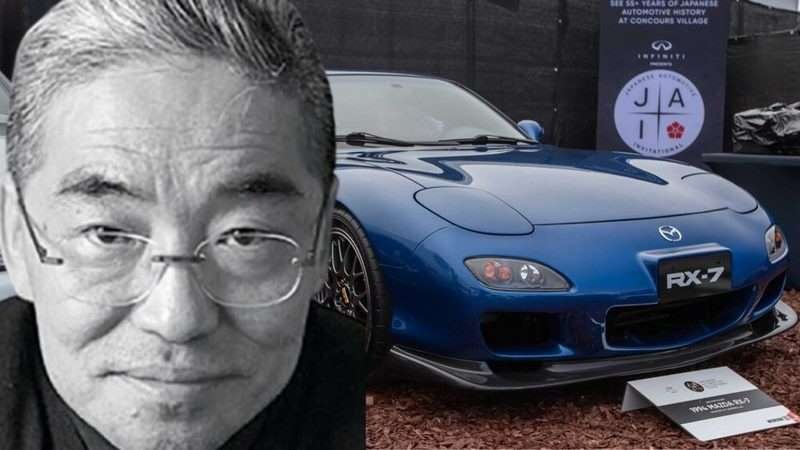
Remembering Tom Matano
As discussions about the MX-5's future continue, it's impossible not to remember Tom Matano, one of the most influential figures behind the Miata's success.
Matano, who sadly passed away in September 2025, played a crucial role in shaping the original MX-5 and also contributed to the legendary RX-7. His design philosophy focused on creating cars that were timeless, lightweight, and enjoyable to drive rather than simply powerful.
His legacy continues to live on every time an MX-5 takes to the road, reminding enthusiasts why the Miata became far more than just another sports car.
Can an Electric Miata Still Feel Like a Miata?
The automotive industry is moving steadily toward electrification, and Mazda knows the MX-5 will eventually have to evolve as well.
The question isn't whether an electric MX-5 can be built—it certainly can. The real question is whether it can deliver the same lightweight, connected, driver-focused experience that has made the Miata a global icon for more than three decades.
For Mazda, preserving that spirit appears to matter just as much as embracing the future.
Jeremy Clarkson has revealed he was diagnosed with aggressive prostate cancer. The former Top Gear presenter says the disease was caught early and he is expected to undergo surgery.
Jeremy Clarkson Reveals Cancer Diagnosis, Says It Was Caught Early
Jeremy Clarkson, one of the most recognisable figures in the automotive world, has announced that he has been diagnosed with prostate cancer.
The 66-year-old television presenter shared the news during the latest season of Clarkson's Farm, explaining that doctors discovered the disease following medical examinations earlier this year.
Diagnosis Confirmed After Medical Tests
Clarkson said he underwent a biopsy after routine medical checks, which confirmed an aggressive form of prostate cancer.
Despite the diagnosis, he stressed that the cancer was detected at an early stage and that doctors are optimistic about treatment.
He also confirmed that surgery is planned and that he expects to be away from work for a short period during his recovery.
Message to Fans
In the final episode of the latest season of Clarkson's Farm, Clarkson addressed viewers from a hospital bed, acknowledging that the treatment had not gone entirely as planned.
However, he remained positive and expressed hope that he would return for the next season once his recovery is complete.
A Familiar Face in the Automotive World
Jeremy Clarkson became one of the world's best-known automotive journalists through Top Gear, where he presented the programme between 1988 and 2015.
He later reunited with Richard Hammond and James May for The Grand Tour, before launching the highly successful farming documentary series Clarkson's Farm.
For millions of enthusiasts worldwide, Clarkson has played a significant role in making automotive journalism entertaining and accessible.
Ferrari has officially unveiled the all-electric Luce, combining 1,050 horsepower, four electric motors and a completely new vision for the future of Maranello.
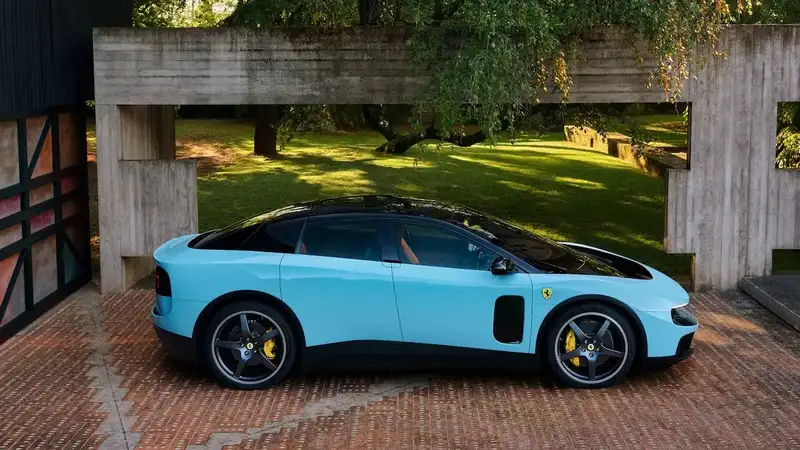
Ferrari has finally stepped into the fully electric era but not in the way many people expected. Instead of building a quiet, sterile EV focused only on efficiency numbers, the Italian marque is trying to redefine what an electric performance car should actually feel like. That’s exactly why the new Ferrari Luce may become one of the most important cars in modern Ferrari history.
Unveiled during a special event in Rome, the Ferrari Luce is the brand’s first fully electric production model. However, Ferrari insists this is not simply an electric Ferrari. According to the company, Luce represents an entirely new chapter for Maranello, combining traditional Ferrari emotion with next-generation technology.
Ferrari Luce Produces 1,050 Horsepower
At the core of the Ferrari Luce are four independent electric motors one dedicated to each wheel. Combined output reaches an astonishing 1,050 horsepower, making it one of the most powerful road cars Ferrari has ever produced.
Performance figures are equally dramatic. Ferrari claims:
0-100 km/h in just 2.5 seconds
0-200 km/h in 6.8 seconds
Top speed above 310 km/h
But Ferrari says raw acceleration is only part of the story.
The Luce uses an advanced real-time torque management system capable of adjusting suspension, steering response, regenerative braking and power distribution hundreds of times per second. Ferrari engineers claim the goal was not simply maximum grip, but preserving the alive feeling drivers expect from the brand.
A Completely New Ferrari Philosophy
The Luce also introduces a very different design language for Ferrari. The project was reportedly developed with support from LoveFrom the design collective founded by former Apple design chief Sir Jony Ive and Marc Newson.
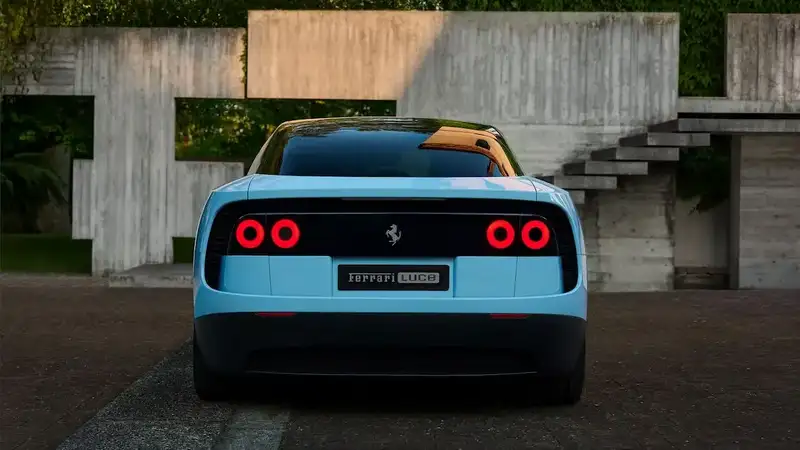
Compared with traditional Ferrari models, the Luce looks cleaner, lower and more futuristic. Slim lighting elements, huge aerodynamic surfaces and sculpted body panels give the car a distinctive presence without relying on exaggerated styling.
Ferrari also confirms the Luce is one of the most spacious road cars the brand has ever created, offering genuine four-door practicality alongside hypercar-level performance.
Ferrari Wants To Preserve Emotion In The EV Era
Perhaps the most controversial topic surrounding any electric Ferrari is sound. Ferrari knows that the emotional soundtrack has always been part of the driving experience, so the company developed an entirely new acoustic system for the Luce.
Instead of fake speaker-generated engine noise, Ferrari says the system amplifies real mechanical frequencies and vibrations created by the motors and drivetrain. The aim is to give drivers feedback and emotional connection rather than artificial theatre.
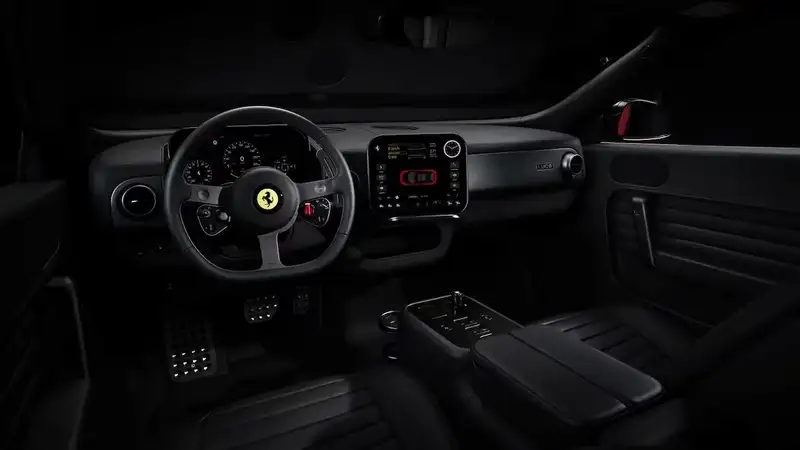
Inside, the Luce mixes digital technology with physical controls. Ferrari deliberately avoided an overly touch-sensitive interior layout, bringing back tactile buttons and mechanical-feeling switchgear to maintain a driver-focused cockpit.
Fast Charging And Long-Distance Capability
The Ferrari Luce is built on an 800V electrical architecture and uses a 122 kWh battery pack. Ferrari estimates driving range at approximately 530 kilometres depending on configuration and driving conditions.
Thanks to 350 kW DC fast charging capability, the Luce can recover a significant amount of battery capacity in around 20 minutes under ideal conditions.
Ferrari also says many key components including battery management systems and software calibration were developed internally at Maranello.